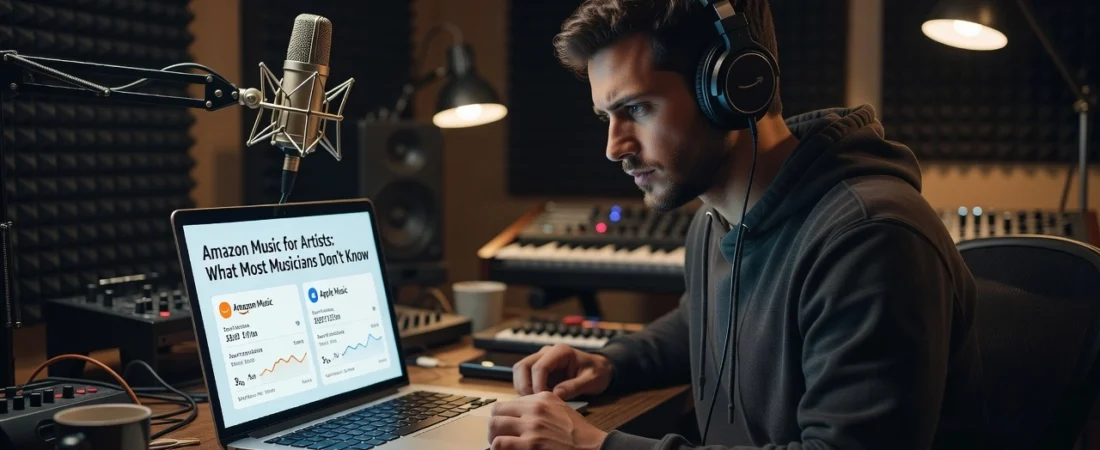
If you’re an independent musician trying to get your music heard, you’ve probably spent a lot of time thinking about Spotify and Apple Music. But here’s something that might surprise you: Amazon Music is quietly becoming one of the most powerful platforms for independent artists, and most musicians are barely scratching the surface of what it offers.
With over 100 million customers and a growing catalog of features built specifically for creators, Amazon Music deserves way more attention than it typically gets. The problem is that many artists simply don’t know where to start or what tools are even available to them.
That’s exactly why we put this guide together. Whether you’re releasing your first single or trying to grow an existing fanbase, this list will walk you through the hidden features, practical tips, and insider knowledge that most musicians overlook completely. By the time you finish reading, you’ll have a clear picture of how to make Amazon Music work for you, not just as a place to upload songs, but as a real tool for building your career. Let’s dive in.
Amazon Music by the Numbers (And Why They Matter to You)
Here’s something that might surprise you: Amazon Music has quietly grown to around 80 million users worldwide as of 2026, up from roughly 70 million in 2023. That includes approximately 52.5 million listeners in the United States alone. These are real, engaged people streaming music every single day, and most independent artists never think to target them.
The platform holds about 11.1% of the global music streaming market, placing it solidly in the 3rd to 4th position worldwide. That is not a small slice. That is a platform with serious reach and a loyal audience that keeps showing up.
A big reason for that loyalty? Prime bundling. Tens of millions of listeners access Amazon Music simply because it comes included with their existing Amazon Prime subscription. They did not go out looking for another streaming app; it was already waiting for them. For artists, this means a huge pool of passive listeners who are genuinely open to discovery, without the friction of convincing someone to sign up for yet another service.
Yes, the largest competitor sits at over 280 million subscribers. But Amazon’s smaller, Prime-anchored base is not a consolation prize. It is a focused opportunity with steady growth and far less competition from other artists pitching for playlist placement.
For any independent artist building a multi-platform strategy, Amazon Music is not secondary. It is simply underused, and that gap is your advantage.
Why Most Artists Ignore Amazon Music (And Why That’s Your Edge)
Here’s the thing: most artists are leaving a genuine competitive advantage on the table every single day, simply by ignoring Amazon Music.
Spend five minutes browsing Reddit’s r/musicmarketing and you’ll notice something immediately. The conversations are almost entirely Spotify-focused. Pitching tactics, algorithmic tricks, playlist strategies – it’s Spotify wall to wall. Amazon-specific pitching discussions are rare, underdeveloped, and nowhere near as competitive. That’s not a criticism of those communities; it’s just a reflection of where promotion attention has concentrated. And for you, that concentration creates a genuine opening.
Because fewer artists are actively pitching Amazon curators, the competition for editorial playlist placements is meaningfully lower. Think about what that means practically. When you pitch a well-prepared submission through Amazon Music for Artists, you’re competing against a much smaller pool than you’d face on other platforms. That’s a structural advantage you can act on right now, not someday.
This “overlooked platform” pattern shows up repeatedly in music marketing history. When promotion energy floods one channel, early movers on secondary platforms often capture disproportionate visibility. Savvy independent artists who diversify before the crowd arrives consistently punch above their weight.
Most promotion guides and services focus almost exclusively on one dominant platform, which means Amazon-focused education and tooling remains genuinely scarce. This guide exists specifically to close that knowledge gap.
Artists building an Amazon Music presence now are also positioning themselves perfectly as multi-DSP pitching becomes standard industry practice through 2025 and 2026. Getting established early means you’re already ahead when everyone else catches on.
Who Is Actually Listening on Amazon Music
So who’s actually on the other end of the speaker when your song plays on Amazon Music? Understanding this audience could genuinely change how you approach your release strategy.
The core listener base is made up largely of Amazon Prime subscribers, and that shapes everything. These tend to be older, higher-income households with established routines and real purchasing power. We’re not talking about a teenager streaming on their phone during lunch. We’re talking about adults in their 30s, 40s, and 50s who have Echo devices scattered around the house and let Alexa handle the music while they cook dinner, work from home, or wind down in the living room.
That voice-activated listening behavior is genuinely unique. When someone says “Alexa, play something like Tom Petty” or “play the best new country,” that voice command feeds directly into Amazon’s algorithmic and editorial recommendation engine. It’s a completely different discovery path than scrolling through app playlists, and Amazon Music for Artists analytics actually tracks these voice request numbers separately so you can see how your music is being discovered this way.
Because Echo devices power passive, background listening in kitchens and living rooms, certain genres thrive here more than others. Ambient, classic rock, country, pop, and holiday music perform especially well in these low-attention, high-repeat listening environments.
Here’s the strategic takeaway: most independent artist campaigns are built around younger, app-native audiences. That means the adult household demographic on Amazon is genuinely underserved and less competitive. If your music resonates with grown-up listeners, Amazon should be a serious priority in your pitching calendar, not an afterthought.
How to Pitch Your Music to Amazon Curators Step by Step
Getting your music in front of Amazon’s editorial team is more straightforward than you might think, but there are a few steps you absolutely cannot skip. Here is exactly how it works.
1. Claim and verify your artist profile first
Before anything else, head to artists.amazonmusic.com and claim your artist profile. This is a hard requirement; you cannot access the pitch tool without a verified account. The process involves searching for your artist name, selecting your profile, and completing a verification application. Depending on your distributor and how your music is set up, this can take several days, so do not leave it until the week of your release. Build it into your release planning timeline from the very beginning.
2. Know your eligibility window
Timing matters more than most artists realize. Your track must be an upcoming release or no more than approximately 14 days past your street date to qualify. Miss that window and you will need to wait for your next release. This is why submitting early, ideally at least a week before your release date, gives Amazon’s editorial team the lead time they need to actually consider your track for playlists or programming.
3. Treat the pitch form like a professional brief
The pitch submission form asks for genre, similar artists, your social media and PR strategy, advertising spend, target audience details, and any notable syncs or video assets. Every field matters. Curators use this information to match your track with the right listeners, so be specific and compelling rather than vague and rushed.
4. Do not wait for a response
Amazon does not send feedback or status updates after you submit. Instead, check your Amazon Music for Artists dashboard after your release date and watch your streaming data, saves, and playlist activity for signs of placement.
What Amazon Music Curators Actually Want in a Pitch
Think of your pitch less like a submission and more like a business proposal. Amazon Music curators are evaluating whether featuring your track makes sense for their playlists, and they are looking for specific signals that tell them you are a professional artist worth the risk.
1. Show up with a real marketing plan. Curators want to see that promotion is already happening around your release. Be specific: mention your ad spend, upcoming live dates, a music video dropping the same week, or blog and radio support lined up. Saying you plan to “post on social media” is not enough. Saying you have three Instagram Reels scheduled, a PR campaign running, and a video premiering the release week is a completely different story. Editorial placement is designed to amplify momentum that already exists, not manufacture it from scratch.
2. Describe your listener like you actually know them. Skip the phrase “fans of good music” entirely. Instead, write something like: “women aged 22-35 who love indie folk artists, based primarily in the US and UK.” That level of specificity helps curators match your track to the right playlist and shows you understand your own audience.
3. Get your metadata right before anything else. Genre tags, mood tags, ISRC codes, release date, and artist name formatting all need to be accurate before you pitch. Errors here hurt discoverability even if you land a placement. Check out this breakdown of the Amazon Music pitch tool for a practical walkthrough of what the form actually requires.
4. Lead with any validation you have. Sync placements, TV or film features, press coverage, or a professionally produced music video all reduce the perceived risk of featuring an emerging artist. The pitch form literally has a space for this information, so use it. Even a single notable placement can shift a curator’s decision in your favor.
5. Mention your promotion partners. If you are working with a service like Playlist Pump to coordinate outreach across platforms, say so directly in your marketing plan. It signals that your release is organized, multi-platform, and professionally managed, which is exactly the kind of artist curators want associated with their playlists.
Amazon Music Editorial Playlists Worth Knowing About
Knowing which playlists exist before you pitch is genuinely one of the most underrated moves an independent artist can make. Here are five things worth understanding about Amazon Music’s editorial playlist world.
1. The “2026 Artists to Watch” Playlist Is a Real Career Signal Amazon Music’s annual Artists to Watch campaign spotlighted 49 emerging artists across genres in early 2026, including names like Braxton Keith, Destin Conrad, and Seyi Vibez. Selected artists landed on 28 of Amazon’s top playlists simultaneously, including “Country Heat” and “K-Pop Now.” That kind of cross-playlist exposure can meaningfully shift streaming momentum for an independent artist, especially on a platform where competition for editorial attention is lower than elsewhere.
2. Placement Angles Go Way Beyond Genre Amazon curates playlists around moods, activities, and specific moments, think workout sessions, dinner parties, road trips, and focus blocks. Your track might not fit a genre playlist but could be a perfect fit for a “Sunday Morning” or “Late Night Drive” list. That opens up multiple pitching angles for a single release.
3. Alexa Amplifies Editorial Picks When a playlist earns editorial placement, it becomes more likely to surface through Alexa voice recommendations. Millions of Echo device users discover music by asking Alexa for something that fits their mood or activity, not by browsing an app.
4. Amazon’s Editorial Investment Is Growing This is not a stagnant platform. Amazon is actively expanding its emerging artist programming as of 2026, making now a smart time to pay attention.
5. Research Playlists Before You Pitch Spend time identifying which Amazon playlists match your genre, energy, and release context. Then shape your pitch narrative around the specific programming goals of those lists. It makes your submission feel intentional rather than generic.
Fitting Amazon Music Into Your Multi-Platform Promotion Strategy
The days of treating one platform as your sole promotional target are officially over. Multi-DSP pitching, which means submitting your music to multiple streaming platforms simultaneously around your release date, has become the standard practice for independent artists heading into 2026. Artists who still operate with a “Spotify first, everything else later” mindset are not just missing streams; they are actively leaving editorial opportunities to expire unused.
Here is the part that catches most beginners off guard: Amazon Music’s pitch eligibility window closes approximately 14 days after your release date. If you spend those two weeks focused entirely on one platform and circle back to Amazon afterward, that window is already gone. Each platform runs its own independent editorial operation, so pitching Amazon at the same time as everywhere else does not hurt your chances anywhere. There is genuinely no downside to sending simultaneous pitches across DSPs; the teams do not communicate, compete, or interfere with each other’s decisions.
This is exactly where working with a service like Playlist Pump becomes practical rather than just convenient. Coordinating individual pitches across multiple platforms, each with their own requirements, timing, and curator contacts, can quickly become overwhelming for a solo artist managing everything alone. Playlist Pump connects artists with curators across platforms, handling the coordination so you can focus on the music itself.
The compounding effect is also worth keeping in mind. Artists who pitch consistently across platforms with every release gradually build algorithmic and editorial traction on each one. Over time, that translates into diversified streaming income that does not collapse if one platform’s algorithm shifts. Amazon is not an afterthought; it is a pillar.
The HD Audio Advantage and What It Means for Your Genre
Amazon Music HD and Ultra HD are genuinely different from what most streaming platforms offer. With over 100 million songs available in lossless CD-quality audio and more than 7 million tracks in Ultra HD resolution, Amazon has built a catalog that rewards careful, attentive listening. This is not background music infrastructure. It is a platform designed for people who actually care about what they hear.
That matters because the listener base it attracts is self-selected in a meaningful way. People who choose Amazon Music specifically for its HD tier are not casual streamers with earbuds in at the gym. They are intentional listeners, often on better equipment, actively seeking out recordings where they can hear the room, the breath, the space between notes. This audience skews toward jazz, classical, acoustic, folk, and high-production pop or rock because those are the genres where production craft is easiest to appreciate at higher fidelity.
If your music is built around detailed instrumentation, wide dynamic range, or layered arrangements, this audience will actually notice. That is a rare and valuable thing. Amazon markets the HD difference aggressively through dedicated playlists, editorial features, and device integration across Echo, Sonos, and mobile, which means it consistently reinforces that quality-first identity to its subscribers.
Practically speaking, always deliver your masters at the highest resolution your distributor supports when sending music to Amazon. HD-eligible tracks are more likely to surface in quality-focused editorial contexts, and that is exactly where your production craft becomes a competitive advantage rather than just a detail only you appreciate.
Start Treating Amazon Music Like the Opportunity It Actually Is
The numbers tell a clear story: 80 million users, 11.1% global market share, and a pitching landscape that is nowhere near as crowded as the platforms dominating most artists’ promotion strategies. This is not a hypothetical opportunity sitting somewhere in the future. It is available to you right now, and most of your competition is not paying attention to it.
Your immediate next moves are simple. Head to artists.amazonmusic.com, claim and verify your artist profile, and audit your metadata to make sure everything is accurate and complete. Then map your next release window and plan your pitch submission around it. Timing matters here; pitches aligned with upcoming releases consistently outperform last-minute or post-release afterthoughts.
Amazon Music pitching delivers the best results when it is part of a coordinated multi-DSP push, not a standalone effort. Syncing your submissions across platforms during your release window amplifies momentum everywhere at once.
If managing multiple submissions feels like too much, Playlist Pump helps artists execute targeted pitching campaigns across platforms, including Amazon Music, so you capture every placement opportunity without juggling every submission yourself.
The artists building Amazon Music traction today, while the channel remains under-utilized, are the ones who will hold a real streaming advantage as the platform continues growing well beyond 2026. Start now.
Conclusion
Amazon Music is no longer a platform you can afford to ignore. With over 100 million potential listeners, creator-specific tools, and features most musicians have never even explored, it represents a genuine opportunity hiding in plain sight.
Here is what to take away from this guide. First, Amazon Music offers powerful tools built specifically for independent artists. Second, understanding the platform’s unique features gives you a real competitive edge. Third, optimizing your presence there takes far less effort than most musicians assume.
The artists who win on streaming platforms are not always the most talented. They are the ones who show up consistently and use every tool available to them.
So take action today. Claim your artist profile, explore the dashboard, and start treating Amazon Music like the serious platform it truly is. Your next fan might already be listening.